Looking for specific financial advice?
This blog provides general educational content. For personalized advice tailored to your unique situation, book a free consultation with our team of ASIC-licensed financial advisers.
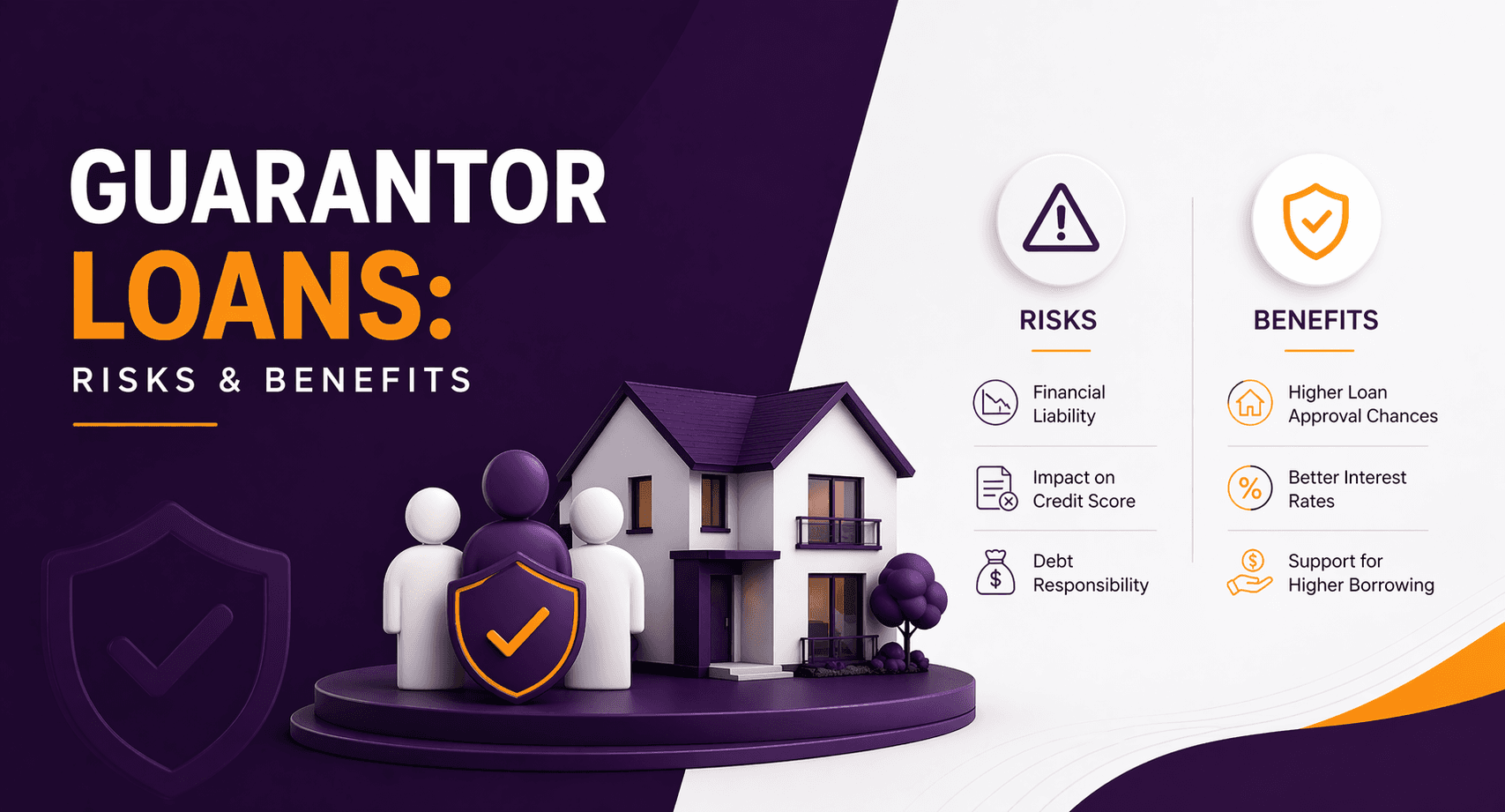
Guarantor Loans: Risks & Benefits (Australia)
Guarantor home loans allow a family member, usually a parent, to help you buy a property by using their own property as security.
The short answer:
They can help you buy sooner without a deposit, but they shift risk onto the guarantor.
Done properly, they can fast-track home ownership. Done carelessly, they can strain finances and relationships.
What Is a Guarantor Home Loan?
A guarantor loan involves:
A borrower (you)
A guarantor (often a parent or close relative)
The guarantor agrees to:
Secure part of your loan using their own property
This reduces the lender’s risk.
How a Guarantor Loan Works
Instead of providing a full deposit, the guarantor covers part of the loan risk.
Example:
Property purchase price: $700,000
Borrower has no deposit
Lender requires 20% security ($140,000)
Guarantor:
Uses equity in their property to secure that $140,000
Result:
Borrower can proceed without a cash deposit
May avoid Lenders Mortgage Insurance (LMI)
Types of Guarantees
1. Limited Guarantee (Most Common)
The guarantor only secures a portion of the loan.
Typically up to 20%
Limits their exposure
2. Unlimited Guarantee (Higher Risk)
The guarantor may be liable for the entire loan.
This is less common and significantly riskier.
Benefits of Guarantor Loans
1. Buy Property Sooner
You don’t need to save a full deposit, which can take years.
2. Avoid Lenders Mortgage Insurance (LMI)
LMI can cost thousands to tens of thousands of dollars.
A guarantor loan may eliminate this cost.
3. Enter the Market Earlier
You may benefit from property growth sooner rather than waiting.
4. Potentially Better Loan Terms
Lower risk to the lender may result in:
More favourable interest rates
Higher borrowing capacity
Risks for the Borrower
1. Higher Debt Levels
You may borrow more than you otherwise would.
2. Financial Pressure
Without a deposit, you may have:
Minimal buffer
Higher loan-to-value ratio (LVR)
3. Relationship Risk
If repayments become difficult, it can impact family relationships.
Risks for the Guarantor (Important)
This is where things get serious.
1. Financial Liability
If the borrower defaults, the guarantor may be required to:
Cover repayments
Sell assets to repay the loan
2. Property Risk
The guarantor’s property is used as security.
In extreme cases, it could be at risk.
3. Reduced Borrowing Capacity
Being a guarantor can affect the guarantor’s ability to:
Take out loans
Refinance
4. Long-Term Commitment
The guarantee remains until:
The loan is reduced sufficiently
Or the property increases in value
When Can a Guarantor Be Removed?
A guarantor can usually be removed when:
The loan falls below 80% LVR
The borrower refinances or restructures
Example:
Property value increases
Loan balance decreases
Result:
Enough equity to remove the guarantee
Guarantor Loan vs Saving a Deposit
Factor | Guarantor Loan | Saving Deposit |
Time to buy | Faster | Slower |
Upfront savings | Low | High |
Risk to family | Higher | None |
Financial independence | Lower initially | Higher |
Flexibility | Moderate | High |
Real-Life Scenario
Tom (First Home Buyer):
No deposit
Uses parents as guarantors
Outcome:
Buys $650,000 property
Avoids LMI
Risk:
Parents’ property tied to loan
Must manage repayments carefully
When a Guarantor Loan May Make Sense
You have stable income
You can afford repayments comfortably
You understand the risks
The guarantor is financially secure
The arrangement is clearly structured
When It May NOT Be Appropriate
You’re stretching your borrowing capacity
The guarantor is financially vulnerable
There’s no clear exit strategy
The arrangement is based on pressure or urgency
Key Question: Are Guarantor Loans Worth It?
Guarantor loans can be effective, but they’re not just a financial decision.
They’re a shared financial commitment.
What matters is:
Whether both parties understand the risks
Whether the loan is structured properly
Whether there’s a clear plan to remove the guarantor
Without that, the downside can outweigh the benefits.
FAQs
1. Do guarantors need to provide cash?
No. They typically use equity in their property as security.
2. Can anyone be a guarantor?
Usually a close family member, subject to lender approval.
3. Does being a guarantor affect credit?
Yes, it may impact borrowing capacity and financial position.
4. Can a guarantor be removed later?
Yes, usually once the loan reaches a lower LVR (subject to lender assessment).
5. Is LMI always avoided?
Often yes, but it depends on the structure and lender.
6. What happens if the borrower defaults?
The guarantor may be required to cover the shortfall.
7. Are guarantor loans only for first home buyers?
Most common for first home buyers, but not limited to them.
Considering a Guarantor Loan?
A guarantor loan can help you enter the property market sooner, but it also creates shared financial responsibility.
Before proceeding, it’s important to understand:
The risks for both borrower and guarantor
How the loan should be structured
When and how the guarantor can be removed
A clear, well-planned approach can help protect both your financial position and your relationship.
Disclaimer
This information is general in nature and does not take into account your personal objectives, financial situation, or needs. You should consider whether it is appropriate for your circumstances and seek professional financial advice. Information is subject to current ATO and Services Australia rules and may change over time.